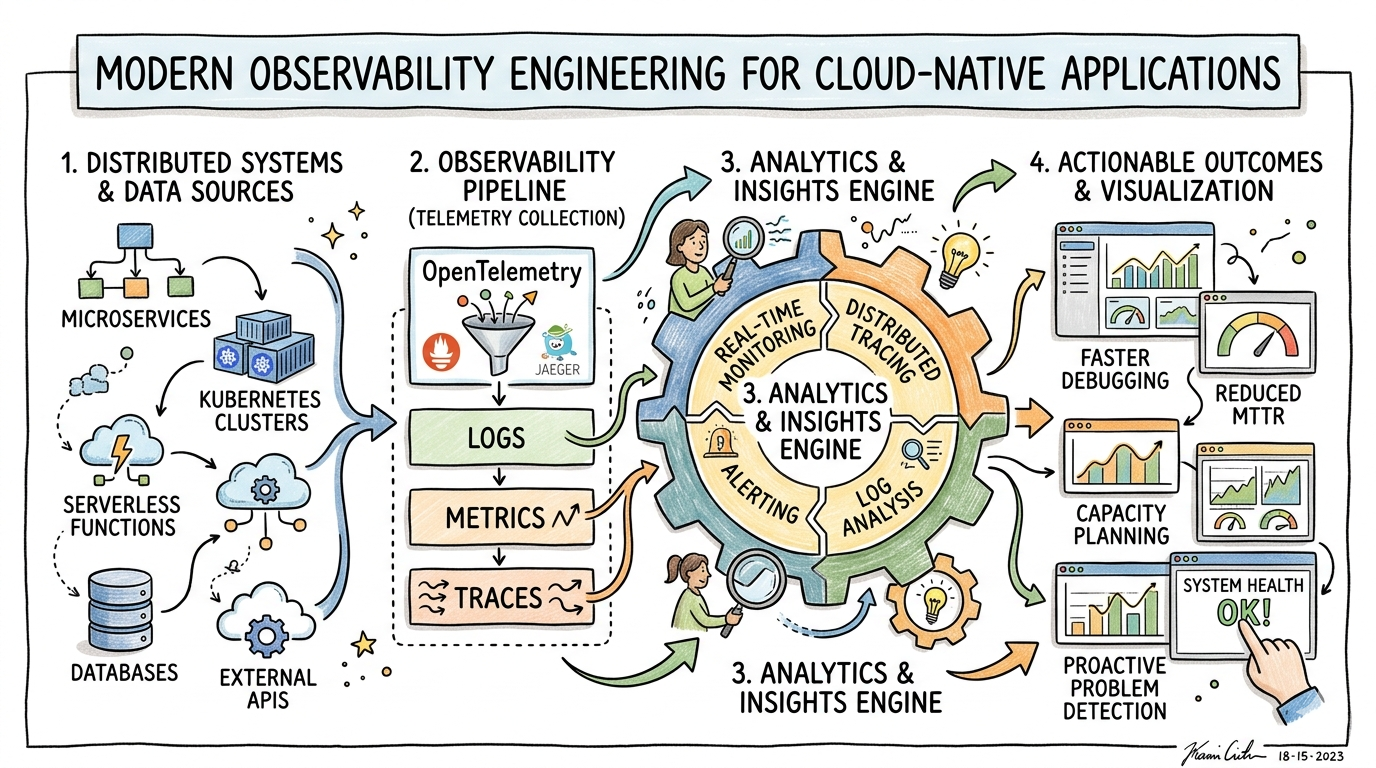
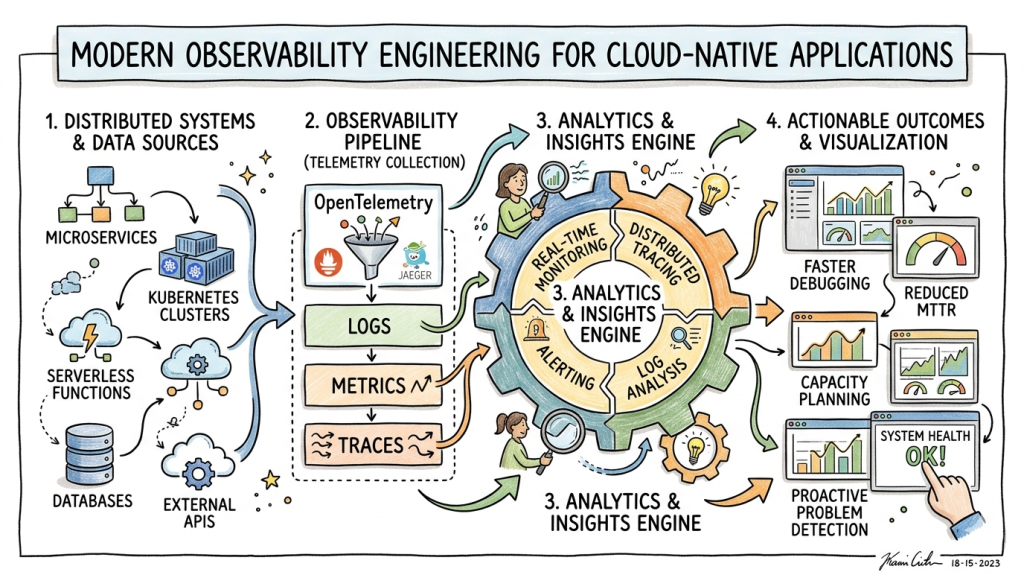
In the current landscape of distributed systems, understanding system health has become a critical skill for any platform or site reliability team. This guide is designed for engineers and managers looking to Master in Observability Engineering (MOE) to gain better insights into their production environments. By focusing on deep monitoring, tracing, and logging, this pathway helps professionals align their technical efforts with business goals. As you navigate the complexities of cloud-native architectures, we will explore how this certification impacts your career growth and provides the tools necessary to excel in the industry. For those interested in automated infrastructure, exploring resources at aiopsschool can further complement your understanding of these advanced topics.
What is the Master in Observability Engineering (MOE)?
The Master in Observability Engineering (MOE) represents a comprehensive framework for understanding how applications and infrastructure behave in real-time. It moves beyond basic monitoring by focusing on high-cardinality data, distributed tracing, and actionable alerting strategies. This certification exists to bridge the gap between reactive troubleshooting and proactive system design. It emphasizes production-focused learning, ensuring that engineers can handle complex failures in large-scale environments effectively. By aligning with modern engineering workflows, it provides the technical depth required to maintain high availability in enterprise practices.
Who Should Pursue Master in Observability Engineering (MOE)?
This certification is ideal for software engineers and SREs who are tasked with maintaining the stability of complex services. Cloud professionals and platform engineers will find the curriculum essential for building resilient infrastructures that can scale under pressure. Security and data engineers also benefit significantly, as observability practices often overlap with auditing and data pipeline health. Whether you are a beginner looking to build a strong foundation or a manager aiming to standardize operational excellence across your team, this guide is for you. It remains highly relevant for professionals in the Indian tech market and the global landscape alike.
Why Master in Observability Engineering (MOE)
The demand for professionals who can effectively diagnose and remediate production incidents is growing rapidly. As enterprise systems become more fragmented, the ability to centralize and interpret performance data becomes a primary driver of technical success. This certification offers longevity, as it teaches core concepts that remain applicable regardless of which specific tools or vendors dominate the market. Investing time in this path provides a clear return on investment by elevating your problem-solving capabilities. It ensures you remain a vital asset to your organization by mastering the art of system visibility.
Master in Observability Engineering (MOE) Certification Overview
The program is delivered via and hosted on
#ObservabilityEngineering. It is structured to provide a hands-on approach to learning, focusing on the practical application of observability tools and methodologies. Candidates are evaluated based on their ability to design, implement, and maintain monitoring solutions that solve real-world problems. The program emphasizes ownership of the entire observability stack, from instrumenting code to managing dashboards and incident response workflows. It is designed to be accessible yet rigorous, challenging engineers to think critically about system performance.
Master in Observability Engineering (MOE) Certification Tracks & Levels
The certification is organized into foundation, professional, and advanced levels, allowing for a structured learning journey. Foundation levels focus on the core principles of telemetry, metrics, and logs. Professional levels delve into distributed tracing, service-level objectives, and complex alerting patterns. Advanced levels cover specialized tracks such as high-scale data observability, automated remediation, and advanced performance tuning. This tiered approach allows you to align your certification efforts with your specific career progression goals and current industry requirements.
Complete Master in Observability Engineering (MOE) Certification Table
| Track | Level | Who it’s for | Prerequisites | Skills Covered | Recommended Order |
| Core | Foundation | Junior Engineers | Basic Linux | Metrics and Logging | 1 |
| Advanced | Professional | SRE / DevOps | Foundation Cert | Distributed Tracing | 2 |
| Expert | Mastery | Principal Engineers | Professional Cert | System Architecture | 3 |
Detailed Guide for Each Master in Observability Engineering (MOE) Certification
Master in Observability Engineering (MOE) – Foundation Level
What it is
This certification validates your understanding of basic observability principles, including how to collect metrics and manage logs. It sets the groundwork for effective system monitoring in cloud environments.
Who should take it
It is perfect for junior engineers, developers, and system administrators who want to build a strong understanding of how to monitor their applications and infrastructure.
Skills you’ll gain
- Implementing basic logging agents
- Configuring essential metrics collection
- Building simple visualization dashboards
- Understanding fundamental alerting concepts
Real-world projects you should be able to do
- Setting up a monitoring agent for a web server
- Creating a basic dashboard to track CPU and Memory usage
- Configuring an alert for service downtime
Preparation plan
- 7–14 days: Focus on understanding the core telemetry signals and how they differ.
- 30 days: Practice installing and configuring agents on local or virtual environments.
- 60 days: Review documentation and practice configuring basic alerts to ensure you can handle common scenarios.
Common mistakes
- Ignoring the importance of clear naming conventions for metrics.
- Focusing only on tool-specific features rather than the underlying principles.
Best next certification after this
- Same-track option: Professional Observability Engineering
- Cross-track option: DevOps Foundation
- Leadership option: Team Lead in Operations
Choose Your Learning Path
DevOps Path
The DevOps path focuses on integrating observability into the CI/CD pipeline to ensure that deployments are safe and verifiable. It teaches engineers how to automate the configuration of monitoring tools during the infrastructure provisioning stage. This ensures that every new service comes with built-in visibility from day one.
DevSecOps Path
The DevSecOps path emphasizes security observability, specifically looking at how to detect anomalous behavior and security threats in real-time. It provides the skills to correlate performance metrics with security logs to identify potential breaches. This path is crucial for engineers focused on hardening infrastructure and protecting sensitive data.
SRE Path
The SRE path is dedicated to site reliability, focusing on service-level objectives, error budgets, and incident management. It teaches engineers how to use observability data to make data-driven decisions about when to release new features versus when to focus on system stability. It is the gold standard for maintaining uptime.
AIOps Path
The AIOps path integrates artificial intelligence into the observability stack to help manage the overwhelming volume of data in large environments. It focuses on anomaly detection, automated root cause analysis, and smart alerting. This is essential for teams managing massive, dynamic infrastructure where manual monitoring is no longer feasible.
MLOps Path
The MLOps path focuses on monitoring machine learning models in production to ensure they remain accurate and performant over time. It teaches how to track model drift, data quality, and prediction latency. This path is vital for engineers supporting data science teams and production AI applications.
DataOps Path
The DataOps path concentrates on the observability of data pipelines, ensuring that data is reliable, timely, and accurate. It covers techniques for monitoring ingestion latency, data completeness, and schema changes. This is a critical skill set for professionals managing large-scale data platforms and warehouses.
FinOps Path
The FinOps path centers on cost observability, helping organizations understand the financial impact of their infrastructure choices. It teaches how to correlate performance metrics with infrastructure costs to identify optimization opportunities. This path enables engineers to build cost-aware systems that deliver maximum value.
Role → Recommended Master in Observability Engineering (MOE) Certifications
| Role | Recommended Certifications |
| DevOps Engineer | Professional Observability |
| SRE | Advanced SRE Observability |
| Platform Engineer | Master Infrastructure Observability |
| Cloud Engineer | Cloud Observability Specialist |
| Security Engineer | Security Telemetry Expert |
| Data Engineer | Data Pipeline Observability |
| FinOps Practitioner | Cost Observability Master |
| Engineering Manager | Observability Strategy Leader |
Next Certifications to Take After Master in Observability Engineering (MOE)
Same Track Progression
Continue deepening your knowledge by pursuing specialized mastery certifications within the observability domain. This could involve focusing on specific high-scale technologies, advanced trace analysis, or custom telemetry development. These certifications solidify your status as a subject matter expert.
Cross-Track Expansion
Broaden your skill set by moving into complementary areas such as cloud architecture, security, or AI operations. Understanding how observability integrates with these other domains makes you a more versatile engineer. It allows you to tackle complex, cross-functional problems with ease.
Leadership & Management Track
For those aiming for management, certifications in technical strategy and team leadership are excellent next steps. These programs help you translate technical observability insights into business value and team goals. They prepare you to lead large-scale digital transformation initiatives.
Training & Certification Support Providers for Master in Observability Engineering (MOE)
DevOpsSchool provides comprehensive, industry-recognized training that prepares professionals for complex real-world challenges. Their curriculum is highly regarded for its hands-on approach and focus on modern tooling.
Cotocus specializes in deep-dive training sessions that help engineers master difficult technical concepts through practical workshops. They are known for their experienced mentors who bring real-world knowledge to the classroom.
Scmgalaxy offers focused certification paths that help professionals master version control and infrastructure automation. They are a great choice for those looking to build a strong foundation in DevOps practices.
BestDevOps provides high-quality resources and training courses that are tailored for both beginners and experienced professionals. Their programs are well-structured and focus on practical outcomes.
devsecopsschool offers specialized training in security-focused operations, helping engineers build resilient and secure systems. They are a must-visit for anyone interested in the intersection of security and DevOps.
sreschool provides industry-leading guidance for site reliability engineers who want to master the art of uptime and system stability. Their courses are essential for modern operational roles.
aiopsschool focuses on the integration of intelligence into IT operations, providing the skills needed to manage complex and automated systems. They are at the forefront of the AIOps movement.
dataopsschool specializes in data-focused operational practices, helping professionals manage the reliability and efficiency of their data-driven platforms. Their training is highly relevant for data engineering teams.
finopsschool offers expertise in cloud financial management, helping professionals optimize their infrastructure spending through data-driven strategies and observability.
Frequently Asked Questions (General)
- What is the difficulty level of this certification?The certification is designed to be challenging but achievable, requiring a mix of theoretical knowledge and practical experience to pass the assessments successfully.
- How much time is required to prepare for this path?Preparation time varies based on your background, but most professionals dedicate between four to eight weeks of consistent study and hands-on practice.
- Are there any mandatory prerequisites before starting?While not strictly required, a basic understanding of Linux, cloud platforms, and application development will significantly improve your success rate in this program.
- What is the return on investment for this certification?Professionals who obtain this certification often report better job prospects, higher salary potential, and improved confidence in handling production incidents.
- How does this certification differ from others in the market?This program is highly focused on real-world, production-ready skills rather than just theory, making it much more applicable to day-to-day engineering tasks.
- Can this certification help me move into a leadership role?Yes, by mastering observability, you gain a high-level view of system health that is vital for technical leadership and management positions.
- Is this training suitable for beginners?While it covers advanced topics, the foundation level is designed to be accessible to those who are willing to put in the effort to learn.
- Are there any exams or projects included?The certification involves both theoretical assessments and hands-on projects to ensure that candidates can apply what they have learned effectively.
- How often should I update my certification?As the technology landscape evolves, it is recommended to review and update your knowledge every year to stay current with new tools and best practices.
- Does this certification cover specific tools?The curriculum focuses on universal principles that can be applied to most major observability tools, ensuring that your skills are transferable.
- What if I fail the certification assessment?Candidates are generally provided with feedback and the opportunity to retake the assessment after a designated period of further study and preparation.
- Is this certification recognized globally?Yes, the skills and methodologies covered in this program are widely respected and relevant in the global tech industry.
FAQs on Master in Observability Engineering (MOE)
- How does observability differ from traditional monitoring?Monitoring tells you when something is wrong; observability lets you understand why it is wrong through deep data analysis.
- Is this certification strictly for SREs?No, it is highly valuable for developers, cloud engineers, and any professional working with distributed systems.
- Does it cover distributed tracing in detail?Yes, deep-dive modules on distributed tracing are a core component of the professional and advanced levels.
- Will this help me troubleshoot my application?Absolutely, the core focus is on providing the skills needed to effectively diagnose and remediate production performance issues.
- How do I choose the right specialization track?Choose the track that aligns with your current role or your next career aspiration to maximize the impact of your certification.
- Can I use my existing company infrastructure for projects?It is recommended to use lab environments for practice to ensure that you are not impacting real-world production systems.
- What is the most important skill taught in this program?Learning how to ask the right questions of your data to uncover the root cause of system failures is the most critical skill.
- Is it necessary to have programming experience?A basic familiarity with scripting or programming is helpful for instrumenting code and automating observability tasks.
Final Thoughts: Is Master in Observability Engineering (MOE) Worth It?
If you are a professional looking to distinguish yourself in a competitive engineering market, this certification is a solid investment. It does not promise shortcuts or magic solutions; instead, it provides a rigorous framework for developing deep technical expertise. As systems grow in complexity, the ability to see and understand the inner workings of your infrastructure is no longer a luxury but a necessity. By committing to this learning path, you are preparing yourself to handle the demands of the modern technical world with confidence and skill. Take the time to master these concepts, apply them in your daily work, and you will find yourself moving forward in your career as a more capable and efficient engineer.
