Introduction
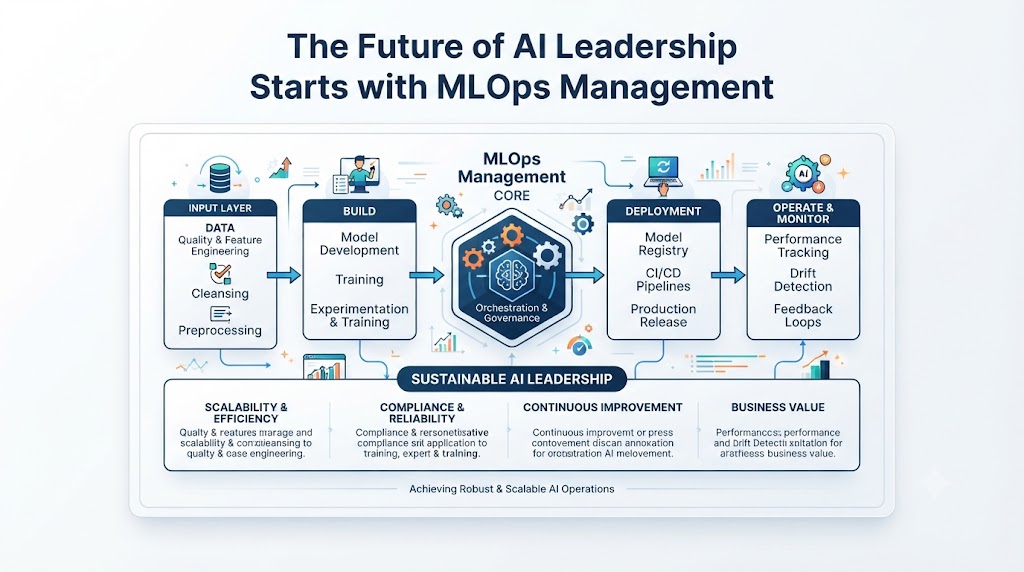
As modern enterprises race to deploy artificial intelligence models into production at scale, the gap between data science experimentation and reliable software engineering has never been more critical. The Certified MLOps Manager is an elite professional credential designed to bridge this divide, equipping technical leaders with the frameworks required to govern machine learning lifecycles efficiently. This comprehensive guide is tailored for software engineers, machine learning practitioners, site reliability engineers, and technical leaders who want to validate their expertise in scalable model deployment, monitoring, and infrastructure management. Within modern DevOps, cloud-native architectures, and platform engineering careers, mastering machine learning operations ensures that data-driven systems remain robust, secure, and cost-effective. By exploring this structured guide, professionals can make informed career decisions, understand rigorous certification tracks, and align their technical capabilities with enterprise-grade demands. To begin your journey toward operational excellence, explore the aiopsschool platform to discover official training paths and structured certification outlines.
What is the Certified MLOps Manager?
The Certified MLOps Manager represents a pinnacle standard for validating professional competency in orchestrating, automating, and governing machine learning pipelines from inception to retirement. It exists because traditional software deployment strategies fail to address the non-deterministic nature of data drift, feature stores, model retraining, and continuous compliance in artificial intelligence applications. This credential emphasizes real-world, production-focused learning over abstract theory, ensuring candidates master containerized model serving, automated CI/CD/CT pipelines, and robust monitoring frameworks. It aligns seamlessly with modern engineering workflows, bridging the gap between data science velocity and operational stability. Enterprises rely on certified managers to establish governance models, minimize deployment risks, and maximize the return on investment for enterprise artificial intelligence initiatives.
Who Should Pursue Certified MLOps Manager?
This professional certification benefits a wide array of technical roles, including machine learning engineers, data scientists transitioning into production, software developers, site reliability engineers, and cloud infrastructure specialists. Engineering managers and technical leaders also pursue this credential to better understand how to oversee machine learning teams, evaluate system scalability, and manage technical debt in artificial intelligence products. Beginners with a foundational understanding of software development and cloud computing can use this certification to break into specialized operations roles. Experienced engineers leverage the advanced curriculum to validate enterprise-grade architectural design and leadership capabilities across global organizations. Both international markets and the rapidly expanding technology ecosystem in India place high value on certified professionals who can manage complex machine learning deployments securely.
Why Certified MLOps Manager
The exponential growth of enterprise artificial intelligence adoption has created an unprecedented demand for leaders who understand how to operationalize machine learning models safely and efficiently at scale. This certification provides exceptional longevity by focusing on core architectural principles, automation frameworks, and governance standards that remain relevant regardless of specific tooling shifts. Professionals who hold this credential demonstrate an ability to reduce technical friction, accelerate time-to-market for predictive applications, and maintain strict regulatory compliance across cloud environments. The return on time and career investment is substantial, positioning certified practitioners for senior leadership roles, higher earning potential, and increased organizational impact. By mastering these operational frameworks, engineers future-proof their careers against rapidly evolving technology cycles and secure high-value positions in top-tier engineering organizations.
Certified MLOps Manager Certification Overview
The program is delivered via Certified MLOps Manager and hosted on aiopsschool. The certification approach combines rigorous theoretical assessments with practical, hands-on evaluations of architectural design, pipeline automation, and model governance. The program structure is divided into progressive levels that test both foundational knowledge and advanced enterprise problem-solving capabilities under real-world conditions. Candidates retain ownership of their professional credential through continuous learning and periodic recertification requirements that reflect the fast-paced evolution of artificial intelligence operations. The assessment structure ensures that only individuals with genuine production competence earn the title, providing hiring managers with absolute confidence in certified candidates.
Certified MLOps Manager Certification Tracks & Levels
The certification journey is structured across foundation, professional, and advanced tiers to accommodate varying levels of career experience and technical specialization. Foundation tracks establish core concepts around version control for data, basic containerization, and simple model deployment pipelines. Professional tracks dive deep into automated continuous training, advanced feature store management, distributed computing, and multi-cloud model serving architectures. Advanced tiers focus heavily on organizational governance, cost optimization, security compliance, and strategic leadership of machine learning operations teams. These specialized tracks align directly with modern career progression paths, allowing practitioners to specialize in distinct operational domains while maintaining a holistic view of enterprise artificial intelligence ecosystems.
Complete Certified MLOps Manager Certification Table
| Track | Level | Who it’s for | Prerequisites | Skills Covered | Recommended Order |
| MLOps Foundation | Beginner | Developers and Data Analysts | Basic Python and Git | Version control, basic Docker, simple APIs | 1 |
| MLOps Professional | Intermediate | ML Engineers and DevOps | Foundation Certificate | CI/CD/CT pipelines, Kubernetes, monitoring | 2 |
| MLOps Advanced | Expert | Technical Leads and Architects | Professional Certificate | Governance, multi-cloud scaling, cost control | 3 |
Detailed Guide for Each Certified MLOps Manager Certification
Certified MLOps Manager – Foundation Level
What it is
This certification validates fundamental knowledge of machine learning lifecycle concepts, basic containerization, and simple model deployment workflows.
Who should take it
Software engineers, junior data scientists, and cloud practitioners looking to understand how machine learning models move from notebooks into basic production environments.
Skills you’ll gain
- Understanding of the machine learning lifecycle and artifact management
- Basic containerization of Python applications using Docker
- Introduction to continuous integration principles for data science
- Basic monitoring of model performance and data inputs
Real-world projects you should be able to do
- Package a trained scikit-learn model into a lightweight REST API container
- Set up a basic GitHub Actions workflow to run unit tests on model training code
- Deploy a containerized model to a single cloud instance with basic logging
Preparation plan
- 7 to 14 days strategy: Focus on intensive review of core Python packaging, Docker fundamentals, and basic Git workflows through targeted video courses.
- 30 days strategy: Dedicate study time to building end-to-end toy pipelines, experimenting with simple model registries, and practicing foundational sample questions.
- 60 days strategy: Combine part-time study with practical deployment projects, shadowing senior engineers, and thoroughly reviewing foundational architectural documentation.
Common mistakes
- Relying purely on theoretical memorization without building functional deployment scripts.
- Neglecting basic software engineering principles like version control and environment isolation.
- Assuming data science code requires no refactoring before production deployment.
Best next certification after this
- Same-track option: Certified MLOps Manager Professional Level
- Cross-track option: Certified DevOps Foundation Practitioner
- Leadership option: Certified Engineering Team Lead
Certified MLOps Manager – Professional Level
What it is
This certification validates advanced competency in designing, automating, and maintaining robust CI/CD/CT pipelines, feature stores, and scalable model serving infrastructure.
Who should take it
Mid-level DevOps engineers, machine learning engineers, and platform specialists with hands-on experience managing production machine learning systems.
Skills you’ll gain
- Orchestrating complex automated training and deployment pipelines
- Implementing enterprise feature stores and data versioning strategies
- Managing Kubernetes clusters optimized for distributed model workloads
- Configuring comprehensive observability for data drift and concept drift
Real-world projects you should be able to do
- Build a fully automated retraining pipeline triggered by detected data drift
- Deploy a high-throughput model serving endpoint using KServe or Triton on Kubernetes
- Implement a centralized feature store integrated with batch and streaming data sources
Preparation plan
- 7 to 14 days strategy: Review advanced Kubernetes architectures, service meshes, and specialized machine learning orchestration tools like Kubeflow or MLflow.
- 30 days strategy: Build complex multi-stage pipelines in a cloud sandbox environment, focusing on automated testing and model validation gates.
- 60 days strategy: Deep dive into production incident troubleshooting, system scalability patterns, and comprehensive review of enterprise case studies.
Common mistakes
- Overcomplicating pipeline architectures without establishing clear business value or monitoring metrics.
- Ignoring security vulnerabilities in third-party machine learning libraries and base container images.
- Failing to establish automated rollback mechanisms for failed model deployments.
Best next certification after this
- Same-track option: Certified MLOps Manager Advanced Level
- Cross-track option: Certified SRE Professional
- Leadership option: Certified Platform Engineering Manager
Certified MLOps Manager – Advanced Level
What it is
This certification validates expert-level mastery in enterprise-wide machine learning governance, cross-functional leadership, multi-cloud strategy, and cost optimization.
Who should take it
Principal engineers, enterprise architects, and technical directors responsible for scaling artificial intelligence initiatives across large organizations.
Skills you’ll gain
- Designing enterprise-grade machine learning governance and compliance frameworks
- Optimizing infrastructure costs for heavy GPU workloads across multi-cloud environments
- Leading cross-functional organizational transformations for artificial intelligence adoption
- Establishing strict security policies and bias mitigation protocols in production
Real-world projects you should be able to do
- Design an organization-wide multi-tenant machine learning platform with strict access controls
- Execute a cost-optimization audit for large-scale GPU training clusters reducing operational overhead
- Formulate enterprise compliance policies for model explainability, auditing, and bias tracking
Preparation plan
- 7 to 14 days strategy: Study enterprise governance frameworks, cloud financial management models, and advanced security compliance standards.
- 30 days strategy: Review complex architectural case studies, design scalable multi-region platform topologies, and practice strategic leadership scenarios.
- 60 days strategy: Engage in peer review of enterprise designs, mentor junior practitioners, and synthesize practical experience into governance blueprints.
Common mistakes
- Focusing exclusively on technical tooling while ignoring organizational workflow and cultural challenges.
- Failing to establish clear accountability metrics for model performance and business impact.
- Overlooking long-term maintenance costs and technical debt associated with custom orchestration tools.
Best next certification after this
- Same-track option: Certified Enterprise AI Architect
- Cross-track option: Certified FinOps Director
- Leadership option: Certified Chief Technology Officer Advisor
Choose Your Learning Path
DevOps Path
The DevOps path focuses on establishing rock-solid foundational automation, configuration management, and software delivery pipelines. Practitioners learn how to apply standard continuous integration and continuous deployment methodologies to machine learning artifacts. This journey ensures that infrastructure provisioning and software releases remain reliable, repeatable, and fully auditable. Engineers following this track master containerization, infrastructure as code, and basic orchestration principles essential for modern systems. Ultimately, this path transforms traditional software builders into versatile platform operators capable of handling diverse computational workloads.
DevSecOps Path
The DevSecOps path integrates rigorous security, vulnerability scanning, and compliance automation directly into the machine learning lifecycle. Professionals explore how to secure model artifacts, protect sensitive training datasets, and prevent adversarial attacks against inference endpoints. This track emphasizes shifting security left by embedding automated audits into code repositories and container image registries. Candidates learn to manage access controls, secret management, and regulatory compliance standards across cloud-native environments. Mastering this discipline ensures that artificial intelligence applications remain resilient against evolving cyber threats and data breaches.
SRE Path
The SRE path emphasizes system reliability, high availability, error budgeting, and proactive incident management for production workloads. Engineers on this route learn how to define service level objectives specifically tailored to model inference latency and prediction accuracy. This track covers advanced observability, automated alerting, chaos engineering, and disaster recovery planning for distributed systems. Practitioners gain the expertise needed to minimize downtime and maintain seamless user experiences under heavy traffic demands. Adopting these reliability principles guarantees that mission-critical artificial intelligence applications perform consistently at enterprise scale.
AIOps / MLOps Path
The AIOps / MLOps path dives deep into the specialized operational mechanics required to manage machine learning models throughout their lifespan. Specialists learn how to automate data ingestion, feature engineering, model training, evaluation, and continuous deployment workflows. This track covers sophisticated model registries, feature stores, drift detection systems, and automated retraining triggers. Candidates master the orchestration tools necessary to bridge the gap between experimental data science and production software engineering. This focused journey prepares professionals to lead enterprise-wide artificial intelligence deployment initiatives successfully.
DataOps Path
The DataOps path focuses on optimizing the velocity, quality, and reliability of data pipelines feeding into machine learning systems. Professionals learn how to apply agile principles and automated testing to data warehousing, ETL processes, and data governance frameworks. This track highlights data lineage tracking, anomaly detection, and collaborative data management across cross-functional teams. Practitioners ensure that downstream machine learning models receive clean, consistent, and timely data feeds without operational bottlenecks. Securing this foundational data layer is critical for maintaining high-performing predictive applications.
FinOps Path
The FinOps path centers on cloud financial management, cost allocation, and resource optimization for expensive machine learning infrastructure. Specialists learn how to monitor GPU utilization, manage spot instances, and eliminate waste in large-scale model training environments. This track equips financial and technical leaders with the analytics needed to balance performance requirements against budgetary constraints. Candidates master cost-attribution models and automated governance policies that prevent unexpected cloud spending surges. Integrating financial accountability ensures that enterprise artificial intelligence projects deliver sustainable long-term business value.
Role Recommended Certifications
| Role | Recommended Certifications |
| DevOps Engineer | Certified MLOps Manager Foundation, Certified DevOps Professional |
| SRE | Certified MLOps Manager Professional, Certified SRE Practitioner |
| Platform Engineer | Certified MLOps Manager Professional, Certified Platform Architect |
| Cloud Engineer | Certified MLOps Manager Foundation, Certified Cloud Infrastructure Specialist |
| Security Engineer | Certified MLOps Manager Advanced, Certified DevSecOps Specialist |
| Data Engineer | Certified MLOps Manager Professional, Certified DataOps Practitioner |
| FinOps Practitioner | Certified MLOps Manager Advanced, Certified FinOps Professional |
| Engineering Manager | Certified MLOps Manager Advanced, Certified Technical Leadership Executive |
Next Certifications to Take After Certified MLOps Manager
Same Track Progression
Deepening your specialization within the operations track involves moving from professional implementations to enterprise architecture and multi-cloud governance. Practitioners can pursue advanced specializations in automated model validation, distributed training optimization, and specialized feature store engineering. This deep focus allows senior engineers to become recognized authorities in scalable artificial intelligence infrastructure design. Continuing down this path prepares leaders to architect next-generation autonomous systems capable of self-healing and continuous self-improvement.
Cross-Track Expansion
Broadening your skill set involves exploring adjacent operational disciplines such as site reliability engineering, cloud financial management, or advanced security compliance. By acquiring cross-functional credentials, professionals break down organizational silos and become effective bridge-builders across engineering departments. This multidisciplinary expertise makes candidates exceptionally valuable for leadership positions requiring a holistic view of enterprise technology operations. Expanding into new domains also sparks innovation by applying proven reliability and automation patterns from traditional software engineering to artificial intelligence systems.
Leadership & Management Track
Transitioning into executive leadership requires shifting focus from hands-on pipeline configuration to strategic resource allocation, organizational design, and governance. Leaders pursue management certifications that validate their ability to guide engineering teams, manage budgets, and align technology initiatives with business goals. This transition empowers professionals to influence corporate strategy, foster high-performing engineering cultures, and drive large-scale digital transformations. Mastering executive leadership ensures long-term career growth and the ability to steer enterprise artificial intelligence adoption safely and profitably.
Training & Certification Support Providers for Certified MLOps Manager
DevOpsSchool is a premier global provider offering comprehensive training programs, expert-led bootcamps, and structured certification pathways designed to elevate technical careers. Their curriculum focuses heavily on real-world scenarios, ensuring that practitioners acquire practical skills that can be applied immediately in production environments. With experienced mentors and up-to-date course material, they help organizations and individuals achieve operational excellence across modern cloud-native ecosystems.
Cotocus delivers specialized enterprise consulting and professional training services tailored to modern software delivery, automation, and platform engineering needs. Their expert instructors bring decades of industry experience, providing deep technical insights into complex distributed systems and operational workflows. By partnering with leading technology platforms, they empower engineering teams to build resilient, scalable, and secure deployment pipelines.
Scmgalaxy serves as a vital knowledge hub and training platform for software configuration management, continuous integration, and modern DevOps practices. They offer a rich repository of learning resources, community forums, and structured certification courses designed for engineers at all levels. Their commitment to practical, hands-on education helps professionals stay ahead of rapidly evolving industry standards and tooling trends.
BestDevOps provides high-quality educational resources, certification preparation programs, and professional coaching for engineers aiming to master modern operational workflows. Their structured approach simplifies complex architectural concepts, making advanced cloud-native and automation principles accessible to a global audience. They focus on bridging the skills gap between traditional IT administration and modern agile engineering practices.
devsecopsschool specializes in security-first training programs that integrate DevSecOps, vulnerability management, and compliance automation into the software development lifecycle. Their expert-led courses teach engineers how to build robust defense mechanisms into CI/CD pipelines and cloud infrastructure. By emphasizing proactive security practices, they help enterprises protect their digital assets against sophisticated cyber threats.
sreschool focuses exclusively on site reliability engineering principles, offering rigorous training on observability, incident management, automation, and high-availability architectures. Their curriculum is designed to transform traditional system administrators into proactive reliability experts capable of maintaining mission-critical systems. They provide actionable strategies for managing error budgets and scaling infrastructure efficiently.
aiopsschool is a leading authority in artificial intelligence operations education, offering specialized certification tracks for managing machine learning lifecycles at scale. Their programs bridge the gap between data science experimentation and enterprise software engineering through rigorous, production-focused training. They empower technical leaders to build secure, scalable, and governed artificial intelligence platforms.
dataopsschool provides targeted training programs focused on optimizing data pipelines, data governance, and collaborative analytics workflows across modern enterprises. Their courses teach engineers how to apply agile principles and automated testing to data engineering tasks, ensuring high data reliability. They help organizations build robust data foundations essential for successful artificial intelligence and analytics initiatives.
finopsschool delivers specialized education on cloud financial management, cost optimization, and resource governance for modern cloud-native environments. Their training helps technical and financial professionals collaborate effectively to control infrastructure spending without sacrificing performance. They provide actionable frameworks for managing GPU utilization and maximizing return on cloud investments.
Frequently Asked Questions
1. What is the difficulty level of the Certified MLOps Manager program?
The program features a tiered structure ranging from beginner-friendly foundational concepts to rigorous advanced architectural evaluations, accommodating various experience levels.
2. How much time should I dedicate to preparing for the certification exams?
Preparation times vary by track, typically ranging from 7 to 14 days for quick reviews, up to 30 or 60 days for comprehensive, hands-on mastery.
3. What are the formal prerequisites required before enrolling?
Prerequisites depend on the chosen level, starting from basic Python and Git knowledge for beginners up to professional certificates for advanced tracks.
4. What is the return on investment for obtaining this certification?
Certified professionals often experience accelerated career progression, increased earning potential, and enhanced credibility when leading enterprise artificial intelligence initiatives.
5. How should I sequence my learning if I am new to the field?
It is recommended to start with the Foundation track to master basic containerization and workflows before progressing to Professional and Advanced levels.
6. Does the certification focus more on theory or practical application?
The program strongly emphasizes practical, production-focused learning, requiring candidates to demonstrate real-world pipeline design and troubleshooting skills.
7. How do I maintain my certification ownership over time?
Credentials are maintained through continuous professional development and periodic recertification requirements that reflect evolving industry standards.
8. Are the skills learned transferable across different cloud providers?
Yes, the curriculum focuses on core architectural principles, open-source orchestration tools, and vendor-agnostic governance frameworks applicable anywhere.
9. Can engineering managers benefit from this technical certification?
Engineering managers gain valuable insights into system scalability, technical debt reduction, and effective oversight of machine learning teams.
10. How does this certification impact career opportunities in India and globally?
The credential validates high-demand skills sought after by multinational corporations and fast-growing technology companies both in India and worldwide.
11. What kind of hands-on projects are expected during preparation?
Candidates should expect to build containerized model APIs, automated continuous training pipelines, and comprehensive monitoring dashboards.
12. Where can I find official study materials and exam registration details?
Official training paths, course outlines, and registration details are hosted directly on the designated platform provider website.
FAQs on Certified MLOps Manager
1. How does Certified MLOps Manager differ from standard DevOps certifications?
This program specifically addresses non-deterministic model behaviors, data versioning, feature stores, and continuous training loops unique to artificial intelligence.
2. Is coding experience mandatory to succeed in this certification track?
A working knowledge of Python and basic software engineering principles is necessary to understand pipeline scripts and containerization configurations.
3. What specific tools and frameworks are covered in the curriculum?
The curriculum covers industry-standard tools including Docker, Kubernetes, MLflow, Kubeflow, KServe, and various enterprise feature store platforms.
4. How does the certification address model drift and monitoring?
Candidates learn to configure advanced observability metrics that automatically detect data drift, concept drift, and degradation in predictive accuracy.
5. Are security and compliance covered in the advanced certification modules?
Advanced modules place significant emphasis on model explainability, bias mitigation, data privacy regulations, and secure artifact repositories.
6. Can data scientists benefit from taking this operations-focused certification?
Data scientists gain a deep understanding of production constraints, enabling them to write more deployable code and collaborate effectively with engineers.
7. How are multi-cloud environments managed within the advanced curriculum?
The program teaches architectural patterns for deploying scalable machine learning workloads across diverse cloud infrastructure providers efficiently.
8. What kind of post-certification support is provided to candidates?
Certified individuals gain access to professional alumni networks, continuing education resources, and advanced specialized workshop opportunities.
Final Thoughts: Is Certified MLOps Manager Worth It?
Navigating the transition from experimental artificial intelligence models to reliable, production-grade enterprise systems is one of the greatest challenges facing modern engineering teams. The Certified MLOps Manager credential provides a clear, rigorous, and practical roadmap for mastering this complex operational domain without resorting to marketing hype or empty buzzwords. If your career goal is to lead machine learning initiatives, reduce technical debt, and ensure scalable infrastructure reliability, this certification offers exceptional value. By committing to hands-on learning and adhering to industry-proven architectural standards, you position yourself as an indispensable technical leader in an AI-driven world. Evaluate your current career trajectory, choose the track that aligns with your professional ambitions, and take the definitive step toward operational excellence today.
