Introduction
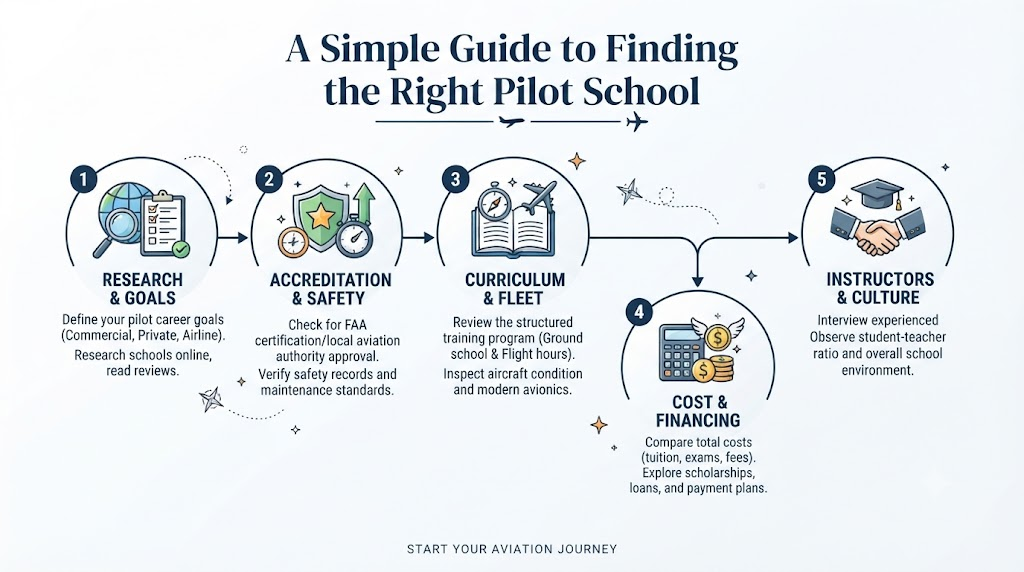
Stepping into the world of aviation is an incredible milestone, but your journey begins with one major decision: choosing the right training institution. Flight training is a unique mix of intense academic study and practical hands-on flying. Because everyone has different career goals, learning paces, and budgets, it pays to research your options carefully. Taking the time to look closely at course structures, instructor experience, aircraft fleets, facilities, and regulatory standards ensures you build a safe, rock-solid foundation for your future in the skies.
What Makes a Good Pilot School?
Finding a reliable training environment means looking past flashy ads or the closest location. The best pilot schools put safety, teaching quality, and student progress above everything else. When you are vetting a school, look at the experience of their flight instructors, the age and condition of their training aircraft, and whether they have modern flight simulators available for procedure practice.
A strong ground school is essential for mastering things like aerodynamics, weather patterns, and navigation. On top of that, a healthy safety culture, clean maintenance standards, and organized scheduling help keep your training moving forward smoothly without unnecessary delays.
How to Find the Best Flight Schools
Comparing flight schools takes a bit of detective work. You want to check what specific licenses they offer, how their curriculum is laid out, and how many aircraft and instructors they have relative to their student count.
External factors matter too. Local weather patterns and airspace congestion can completely change how fast you finish your training. Busy airspace gives you great real-time radio experience, but frequent bad weather can stall your flight hours for weeks. Always double-check current regulatory requirements with your regional aviation authority before signing up to ensure your training hours count toward your official certification.
Choosing the Best Commercial Pilot Training Schools
If your goal is to fly professionally, you need a program designed for career-focused development. The best commercial pilot training schools offer structured curriculums that cover advanced navigation, meteorology, complex aircraft systems, human factors, and strict flight planning.
Look for schools that seamlessly weave in multi-engine training, instrument flight rules instruction, and realistic simulator sessions. Thorough preparation for both written exams and practical checkrides is vital. Keep in mind that a great school gives you the tools to succeed, but your ultimate career outcomes depend on your own hard work, market demand, and meeting all official requirements.
What Makes the Best Pilot Schools in the World Different?
Globally recognized aviation academies often boast massive training fleets, state-of-the-art simulators, and international student communities. However, the definition of the best pilot schools in the world changes depending on what you need.
The main differences usually come down to local airspace regulations, weather reliability, instructor standards, and campus facilities. Instead of chasing global popularity rankings, focus on finding an environment that fits your budget, location preferences, and personal licensing pathway. Training consistency matters much more than brand prestige.
Understanding Commercial Pilot Training
Commercial pilot training is the bridge between flying for fun and flying for a living. This stage takes your foundational skills and sharpens them into professional-grade precision. You will dive deep into advanced instrument procedures, commercial regulations, cross-country navigation, and complex aircraft operations.
Through rigorous ground lessons and practical flight assessments, you learn how to handle challenging scenarios with confidence. Remember that exact hour requirements and testing benchmarks vary depending on the aviation authority governing your training jurisdiction.
What Is a Pilot Training Academy?
A pilot training academy is typically an immersive institution structured specifically to take students from zero experience to commercial readiness. Unlike smaller recreational flight clubs, academies generally run on structured, full-time schedules that combine ground school, simulator labs, and flight blocks into a cohesive daily routine.
Instructor-led learning, routine progress checks, and organized milestone testing keep students on track. This immersive format is especially popular for career changers and international students looking for a predictable, step-by-step route to professional certification.
How to Evaluate the Best Flying Schools
When comparing different flying schools, look closely at their daily operations. Fleet availability is huge; if a school has fifty students and only three working airplanes, you will spend more time waiting than flying.
Check the student-to-instructor ratio to make sure you get personalized attention. Reviewing independent student feedback, checking maintenance tracking, and calculating the total transparent cost of your training will help you avoid unpleasant surprises halfway through your program.
Choosing an Airline Pilot Training Academy
Preparing for the flight deck means adopting a professional mindset early on. An airline pilot training academy focuses heavily on multi-engine ratings, advanced instrument flying, crew resource management, and airline-standard operating procedures.
Students learn crisp radio communication, advanced situational awareness, and strict adherence to safety checklists. While these academies prepare you for the realities of working in commercial aviation, they do not guarantee airline placement or immediate hiring, as airline recruitment depends on industry demand and individual qualifications.
How to Identify the Best Aviation Academy for Pilot Training
Choosing the best aviation academy for pilot training comes down to matching institutional strengths with your personal goals. Look for transparent fee disclosures, realistic training timelines, and robust student support systems.
Because every aspiring pilot has unique financial and learning needs, the right academy is one that balances safety, regulatory compliance, and quality instruction while fitting your specific career trajectory.
Understanding Commercial Pilot License Training
Before you jump into commercial pilot license training, you need to understand the basic administrative and physical requirements. This phase requires meeting specific eligibility rules, holding the appropriate aviation medical certificate, and committing to extensive study and flight hours.
You will need to pass challenging written board exams and demonstrate flawless aircraft control during practical flight tests. Keeping your paperwork organized and staying aligned with your local licensing authority’s guidelines is crucial at every step.
Important Factors to Consider Before Enrolling
Before you put down money or sign a training contract, take a moment to evaluate the practical details:
- Total estimated cost, including hidden fees like landing charges and gear
- Aircraft availability and maintenance backup plans
- Local climate, weather reliability, and geography
- Housing and transportation options if you are moving for school
- Instructor availability and turnover rates
- Program pacing and total expected duration
- Checkride scheduling and examination support
- Clear refund policies and contract cancellation terms
Knowing the full picture upfront keeps your training smooth and stress-free.
How to Prepare for Pilot Training
Understand the Licensing Pathway
Knowing which aviation authority and legal framework you are training under is essential for making sure your hard-earned licenses are recognized where you want to fly.
Review Academic Requirements
Flight training involves plenty of physics, math, and geography. brushing up on these basics early will make ground school much easier to digest.
Understand Medical Requirements
Always get your aviation medical certificate checked off early to confirm your physical eligibility before you invest your savings into flight hours.
Build Strong Aviation Fundamentals
Familiarize yourself with basic weather patterns, aerodynamic terms, and air traffic rules to give yourself a head start before your first official lesson.
Develop Communication Skills
Clear, concise radio communication is a vital safety skill. Practicing how to speak clearly and use proper aviation phraseology builds early confidence.
Prepare Financially
Flight training requires careful budgeting. Plan for tuition, fuel surcharges, gear, exam fees, and living costs so your training never stalls out due to cash flow issues.
The Role of Flight Instructors in Pilot Training
Your flight instructor has a massive impact on your development as an aviator. A great instructor does more than teach you how to move the controls; they model good judgment, provide honest feedback, and help you build safe decision-making habits.
Good instruction focuses on building discipline and situational awareness rather than just rushing you through your hours. A dedicated mentor ensures safety remains your top priority on every single flight.
Why Safety Culture Matters in Flight Training
A strong safety culture is the heartbeat of any reputable flight school. It shows up in rigorous maintenance schedules, careful pre-flight inspections, conservative weather decisions, and an environment where students feel safe reporting mistakes without fear.
When a school encourages open communication about safety risks, it builds habits that will protect you throughout your entire aviation career.
How BestPilotsSchool.com Can Help
Sorting through the endless options in aviation education can feel overwhelming. Platforms like BestPilotsSchool.com act as practical research hubs for anyone looking into pilot schools, flight schools, commercial pilot training, and aviation academies.
By gathering structured information in one convenient place, aspiring aviators can easily compare training options, review requirements, and figure out what to look for in a quality program. Whether you are researching commercial pilot license training or exploring general aviation paths, using organized resources helps streamline your planning so you can make confident choices tailored to your goals.
Common Mistakes to Avoid When Choosing a Pilot School
- Picking a school solely because they advertised the cheapest upfront tuition
- Choosing a program based entirely on flashy marketing claims
- Ignoring whether the school has proper regulatory approvals
- Failing to check the actual ratio of working airplanes to students
- Forgetting to budget for extra costs like landing fees and gear retakes
- Overlooking instructor turnover and experience levels
- Neglecting to ask about aircraft maintenance standards
- Enrolling in a licensing pathway without understanding regional limitations
- Assuming every flight school offers the same level of training quality
- Expecting a guaranteed airline job right after graduation
- Overlooking fine-print contract and refund policies
Technology in Modern Pilot Training
Modern flight training blends traditional flying with advanced technology. Flight simulators let you safely practice engine failures, cross-country routing, and instrument approaches in a controlled environment.
Digital ground school platforms, electronic flight bags, and flight planning software help connect classroom theory to real cockpit execution. While technology makes learning faster and safer, it serves as a powerful supplement to real-world flight hours, not a replacement for them.
Career Opportunities After Pilot Training
Earning your commercial license opens doors to a wide variety of exciting aviation roles. Beyond major airlines, commercial pilots fly for cargo carriers, charter operations, corporate flight departments, aerial survey companies, and flight schools.
Where your career goes depends on your flight hours, specialized ratings, economic conditions, and your dedication to continuous improvement. Navigating this industry requires patience, resilience, and adaptability.
Future of Pilot Training and Aviation Education
Aviation education continues to evolve with better simulation software, data-driven progress tracking, and smarter training aircraft. Tomorrow’s training environments will likely feature more immersive virtual tools and an even sharper focus on human factors and safety management.
Even as technology advances, the core traits of discipline, thorough preparation, and a safety-first mindset will always remain at the heart of great pilot training.
Conclusion
Choosing a pilot school is a foundational step that deserves careful research and thoughtful planning. Aspiring aviators should weigh training quality, safety culture, aircraft availability, instructor experience, and total costs against their long-term personal goals.
Always verify current licensing and medical requirements directly with the appropriate aviation authority in your region. By taking a structured, realistic approach to your research, you can choose a training pathway that sets you up for a safe, rewarding, and successful career in aviation.
