Introduction
Starting a family can bring up a lot of questions, especially when you are looking into assisted reproductive technology. Trying to figure out the right treatment paths, researching medical providers, and keeping track of financial details can feel overwhelming. Platforms like IVFHospitalsNow aim to make this journey smoother by organizing reliable, straightforward information. Whether you are reading up on a specific procedure, trying to estimate treatment expenses, or looking at how to compare fertility clinics, getting clear answers is a great first step toward making confident choices.
What Is IVF Treatment?
In-vitro fertilization (IVF) is a specialized medical process designed to help individuals and couples facing different types of fertility challenges. Simply put, it involves bringing mature eggs and sperm together in a specialized laboratory environment outside the body. The treatment generally starts with hormonal medications that encourage the ovaries to mature multiple eggs at once. Once those eggs are collected, they are combined with sperm in the lab to encourage fertilization. The resulting embryos are carefully monitored as they develop, and a specialist then places one or more into the uterus with the hope of achieving a pregnancy. Because everyone’s health background is different, treatment plans are tailored to the individual. Sitting down for a consultation with a qualified medical professional is the only way to figure out whether IVF or another reproductive option makes sense for your situation.
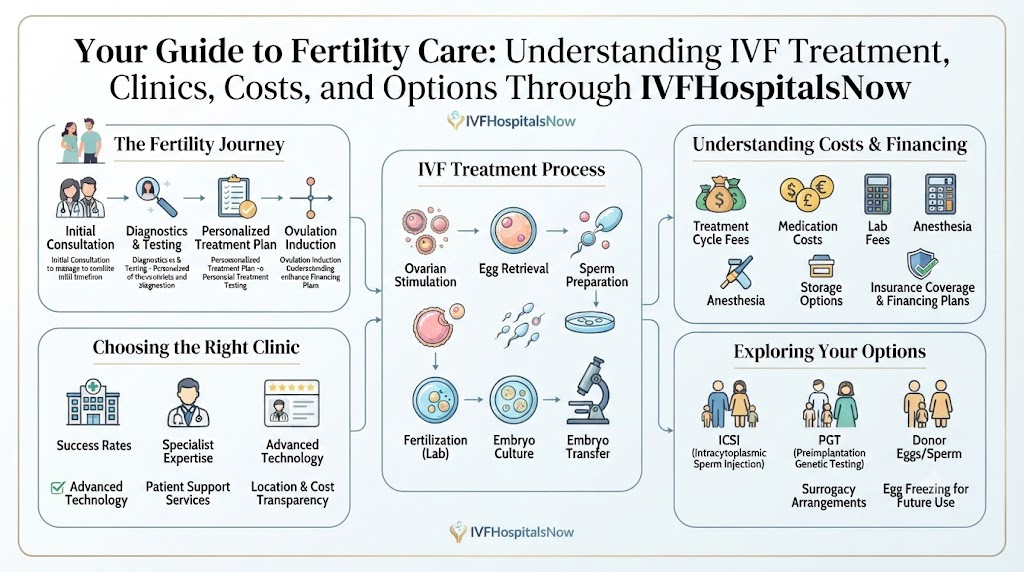
Understanding the IVF Treatment Process
Initial Fertility Assessment
Before diving into any treatment, fertility specialists perform a detailed health evaluation. This usually involves reviewing your medical history, running hormonal blood tests, checking pelvic imaging, and analyzing sperm health. These initial tests help doctors build a plan tailored to your body.
Ovarian Stimulation
To help give you the best chance of collecting healthy eggs, patients undergo a monitored course of hormone medications. These injections encourage the ovaries to develop several mature follicles during a single cycle instead of just one.
Egg Retrieval
Once those follicles reach the right size, a minor outpatient procedure called egg retrieval is scheduled. Using light sedation and ultrasound guidance, a specialist gently collects the follicular fluid containing the mature eggs.
Fertilization and Embryo Development
The retrieved eggs are taken straight to the embryology lab, where they are mixed with prepared sperm. The laboratory team watches the specimens closely over the next few days to check for successful fertilization and healthy embryo growth.
Embryo Transfer
When the embryos reach the right stage, a specialist places one gently into the uterine cavity using a very thin catheter. Any remaining healthy embryos can often be frozen for future use.
Follow-Up and Pregnancy Testing
About two weeks after the transfer, a blood test is done to check hormone levels and see if the procedure resulted in a pregnancy. A follow-up chat with your doctor helps outline what comes next, regardless of the test result.
IVF Treatment Cost and What It Includes
Thinking about the financial side of things is a major part of planning your fertility care. Getting a handle on the total IVF treatment cost means looking at how individual fees add up over the course of a full cycle. While baseline price quotes usually cover the core medical steps, looking at the bigger picture helps avoid surprises.
A complete financial breakdown typically covers:
- Your initial consultations and diagnostic workups
- The prescription hormone medications needed for stimulation
- Clinical monitoring, like blood tests and ultrasound scans
- The egg retrieval procedure itself
- Laboratory work, including sperm preparation and fertilization
- Embryo culture, monitoring, and freezing fees
- The embryo transfer procedure
- Post-transfer check-ins and follow-up care
Because every treatment plan is customized to how your body responds, final expenses vary from person to person and clinic to clinic.
Factors That Can Affect IVF Treatment Cost
No two fertility journeys look the same, which means financial estimates can shift based on several medical and logistical variables. Some of the main things that can influence your overall expenses include:
- Your Age and Diagnosis: Underlying health factors might require specialized laboratory techniques or custom medication protocols.
- Medication Requirements: The specific types and amounts of hormone drugs needed during stimulation vary based on individual body responses.
- Number of Cycles Needed: While some patients succeed on their first try, others may need more than one cycle.
- Advanced Lab Procedures: Extra steps like genetic screening or specialized sperm selection will add to baseline lab bills.
- Location and Clinic Fees: Operating costs, regional healthcare economics, and doctor expertise all factor into pricing.
- Storage and Extras: Long-term cryopreservation fees for frozen embryos or eggs are ongoing costs to keep in mind.
Reviewing a detailed, itemized estimate during your early consultations ensures you understand the difference between base fees and extra expenses.
Understanding IVF Success Rates
When researching care providers, patients naturally look at reported IVF success rates to get an idea of clinic performance. However, those numbers need a bit of context to be truly useful. Success rates can be influenced by:
- Your age at the time of the cycle
- Specific underlying fertility diagnoses
- Egg and sperm quality
- Embryo grading and chromosomal health
- The expertise of the clinic and its laboratory team
- How many total cycles have been attempted
It is worth keeping in mind that statistical averages reflect past group data rather than a guarantee for an individual. When talking to clinics about their numbers, ask how they calculate their stats and how your personal health factors line up with their outcomes.
How to Compare Fertility Clinics
Choosing a care provider takes more than just glancing at flashy ads—it requires a thoughtful look at your options. When you compare fertility clinics, putting together a checklist to review key areas can make the process much easier:
- Specialist Expertise: Look at the board certifications, training, and experience of the reproductive endocrinologists.
- Lab Quality: Ask about the laboratory technology, air quality systems, and qualifications of the embryology team, since a strong lab is crucial for embryo growth.
- Available Services: Make sure the clinic offers the specific treatments or advanced technologies you might need.
- Data Transparency: Check how clearly the clinic shares and explains its success data.
- Patient Communication: Pay attention to how supportive the care team is and whether you feel listened to during visits.
- Clear Pricing: Ensure the practice provides comprehensive written cost estimates without hidden surprises.
What to Look for When Choosing IVF Clinics
Sorting through different IVF clinics means balancing everyday convenience with high medical standards. A welcoming environment can make a big difference in reducing the stress of fertility treatments. Look for practices that value patient education, keep clear communication channels open, and offer supportive resources like counseling or nutrition guidance.
IVF Abroad: Important Things to Consider
For patients exploring international healthcare options, pursuing IVF abroad has become a popular topic of discussion, often driven by potential cost savings or access to specific treatments. That said, traveling internationally for medical care comes with its own set of logistical details to weigh.
Important points to consider include:
- Total Expenses: Factor in flights, extended lodging, and local transit alongside the clinic fees.
- Continuity of Care: Figure out how your pre-treatment scans and follow-up visits will be coordinated between your home doctor and the overseas clinic.
- Safety and Regulations: Research the local accreditation standards and legal rules governing assisted reproduction in that country.
- Language and Communication: Make sure you can talk comfortably with your medical team so you fully understand every step.
- Medical Records: Confirm that your health history can be securely sent to and easily understood by your international care team.
Understanding IVF Cost by Country
When looking into the IVF cost by country, differences usually come down to local healthcare funding, clinic overhead, labor expenses, and prescription drug pricing. Countries with heavily privatized healthcare systems often feature different pricing models than nations with government-backed fertility programs. However, it is always wise to weigh international prices alongside quality markers to make sure a lower upfront cost doesn’t compromise safety standards or follow-up care.
Egg Freezing and Fertility Preservation
Egg freezing, or oocyte cryopreservation, is a proactive way to store unfertilized eggs for future family planning. People choose this route for various reasons, whether they are facing medical treatments that could impact fertility or simply want more time for personal planning.
The procedure follows the same initial steps as the first half of an IVF cycle—including hormone stimulation and egg retrieval—followed by a flash-freezing process (vitrification) rather than fertilization. While egg freezing offers great flexibility, it is important to remember that frozen eggs do not guarantee a future pregnancy, and success rates depend heavily on your age when the eggs were collected.
Understanding ICSI Treatment
Intracytoplasmic sperm injection (ICSI treatment) is a specialized lab technique often used alongside standard IVF. In regular IVF, eggs and sperm are placed together in a dish to let fertilization happen naturally. With ICSI, an embryologist carefully selects a single healthy sperm and injects it directly into the center of a mature egg.
Specialists often suggest ICSI if there are male factor fertility challenges, if previous attempts had low fertilization rates, or when using frozen sperm. While ICSI can help overcome specific fertilization hurdles, it isn’t required for everyone, and your doctor can tell you if it makes sense for your protocol.
Exploring Different Fertility Treatment Options
Assisted reproductive care covers a wide range of medical approaches. Understanding the various fertility treatment options out there helps you have more productive conversations with your care team.
| Fertility Treatment Option | General Purpose | Important Consideration |
|---|---|---|
| Fertility Medicines | Stimulate ovulation or balance hormones to encourage natural conception. | Requires regular ultrasound and blood monitoring. |
| Intrauterine Insemination (IUI) | Places washed sperm directly into the uterus around ovulation time. | Less invasive; success depends heavily on underlying fertility factors. |
| In-Vitro Fertilization (IVF) | Combines eggs and sperm in a lab before transferring an embryo. | Involves a multi-step process with varying emotional and financial commitments. |
| ICSI Treatment | Injects a single sperm directly into an egg during an IVF cycle. | Often recommended for male factor infertility or past fertilization issues. |
| Egg Freezing | Cryopreserves unfertilized oocytes via vitrification for later use. | Success relies on age at freezing and does not guarantee a future birth. |
| Embryo Freezing | Stores leftover embryos from an IVF cycle for future transfer attempts. | Avoids repeating stimulation and retrieval for subsequent tries. |
| Donor-Assisted Treatment | Uses donor eggs, sperm, or embryos to help achieve a pregnancy. | Involves specific legal, emotional, and screening steps. |
How to Prepare for a Fertility Clinic Consultation
Getting the most out of your first appointment with a fertility specialist starts with a bit of prep work. Gathering your medical files and organizing your thoughts will make the visit much more helpful.
- Bring Your Medical History: Collect past gynecological records, lab panels, surgical notes, and summaries of any previous fertility treatments.
- List Your Medications: Write down any prescription drugs, over-the-counter items, and supplements you take regularly.
- Know Your Goals: Be ready to talk about your family-planning timeline and any specific worries you have.
- Prepare Financial Questions: Jot down questions about package pricing, insurance coverage, and financing options.
Questions to Ask Before Choosing a Fertility Clinic
- What diagnostic tests do you recommend based on my health background?
- What is the expected timeline for the treatment plan you are proposing?
- Can you give me an itemized breakdown of all expected costs, including lab work and medications?
- How do you calculate your success rates, and how do they apply to someone with my age and diagnosis?
- What kind of air filtration and laboratory technology do you use?
- What happens if a cycle doesn’t work out, and what are our next steps?
- How are urgent questions or after-hours concerns handled?
- What supportive care, such as counseling, do you offer during treatment?
- Are there extra fees for storing frozen embryos or doing future transfers?
- How will my care be coordinated if I need outside specialist referrals?
Common Mistakes Patients Should Avoid When Comparing Fertility Care
- Choosing Solely Based on Price: Picking the cheapest clinic can mean sacrificing lab quality or running into hidden fees.
- Misreading Success Rates: Looking at broad percentages without checking age groups or diagnoses can lead to false expectations.
- Forgetting Extra Costs: Overlooking medications, anesthesia, or storage fees can throw off your budget.
- Relying Only on Online Reviews: Patient stories offer a personal perspective, but they shouldn’t replace hard data and medical advice.
- Skipping Follow-Up Details: Assuming post-transfer care is fully included without verifying can cause communication gaps.
- Not Getting a Second Opinion: Accepting one recommendation without exploring other viewpoints can limit your options.
- Ignoring Staff Credentials: Failing to check the qualifications of your doctor and lab team can affect safety.
- Underestimating Logistics: Not planning for appointment frequencies or travel requirements can add unnecessary stress.
- Assuming One-Size-Fits-All: Thinking a popular protocol is automatically right for you without a personalized evaluation.
- Believing Guaranteed Claims: Treating marketing promises of guaranteed success as medical certainty.
Who Can Benefit From Fertility Information Platforms?
Couples Exploring IVF
Clear educational guides help couples understand medical terms and procedures before they ever step foot in a clinic.
People Comparing Fertility Clinics
Structured comparison guides help individuals evaluate clinic setups, lab standards, and doctor expertise objectively.
Patients Researching Treatment Costs
Transparent financial breakdowns help prospective patients anticipate expenses and ask better questions during billing talks.
People Considering IVF Abroad
Detailed overviews assist international patients in weighing the medical, travel, and financial sides of going overseas for care.
People Exploring Fertility Preservation
Informational pieces on egg freezing provide clarity for those looking to protect their family-planning options down the road.
People Learning About Different Fertility Treatments
Broad overviews let readers explore assisted reproductive technologies at their own pace.
Step-by-Step Guide to Researching Fertility Treatment
- Understand Your Fertility Concerns: Start by tracking cycles, gathering your health history, and noting any specific symptoms.
- Learn About Available Treatment Options: Familiarize yourself with the differences between basic medications, IUI, IVF, and advanced lab steps.
- Research Suitable Fertility Clinics: Look into regional or international clinics using structured criteria like doctor expertise and lab quality.
- Compare Treatment Costs: Ask for itemized price sheets so you can see base fees, medication expenses, and add-on charges clearly.
- Review IVF Success-Rate Information: Look at contextualized data that matches your age group and specific diagnostic profile.
- Check Clinic and Laboratory Details: Verify accreditations, technology standards, and the background of the embryology team.
- Ask Questions During Your Consultation: Bring a written list of questions to your doctor to clarify your personalized care plan.
- Make a Decision With Qualified Medical Guidance: Combine your own research with professional medical advice to choose the best path forward.
Common Challenges When Researching IVF Treatment
Jumping into fertility research often brings up a few common hurdles. Patients frequently face an overload of conflicting online advice, confusing medical jargon, and opaque pricing that makes comparing options tough. Different ways of measuring success can also make clinic evaluations feel murky.
To stay grounded, rely on solid research habits: double-check facts with trusted medical organizations, ask clinics directly for itemized quotes, and prioritize personalized advice from a qualified reproductive endocrinologist over generic internet forums.
Best Practices for Fertility Clinic Research
- Consult More Than One Provider: Talking to multiple clinics lets you compare communication styles, care philosophies, and pricing.
- Look Past the Price Tag: Weigh clinical expertise and lab safety just as heavily as financial factors.
- Clarify Package Inclusions: Get written confirmation of exactly which steps and medications are covered under your quote.
- Examine Success Metrics with Care: Ask clinics how their stats apply to patients with medical histories similar to yours.
- Check Lab Standards: Prioritize clinics that invest in modern embryology technology and strict quality controls.
- Assess Team Communication: Choose care providers who are empathetic, responsive, and transparent.
- Understand Alternatives: Discuss whether less invasive treatments are an option before jumping straight to complex procedures.
- Ask About Post-Transfer Care: Make sure you know what support and follow-up care are provided after your transfer.
- Review Clinic Policies: Understand how the practice handles things like frozen embryo storage, disposition, and legal paperwork.
- Prioritize Personal Medical Advice: Remember that general reading is a great starting point, but your final choices should come from a qualified specialist.
How to Evaluate Online Fertility Information Responsibly
When reading about reproductive health online, it is important to stay critical. Check who wrote the content, look for current data, and make sure sources are cited. Know the difference between general educational reading and personalized medical advice. Steer clear of sites that rely on dramatic claims, fear tactics, or guaranteed success promises. Whenever you find something interesting online, bring it up with your fertility specialist to see how it applies to your health.
Frequently Asked Questions
1. What factors affect IVF treatment cost?
Expenses depend on diagnostic tests, prescription hormone dosages, clinic fees, lab procedures like ICSI or genetic testing, and how many cycles are needed.
2. How should patients understand IVF success rates?
Success metrics should always be looked at in context, keeping in mind your age, diagnosis, embryo quality, and whether numbers reflect per-cycle or per-transfer outcomes.
3. What should people check when choosing IVF clinics?
Important areas to review include the doctor’s credentials, embryology lab standards, clear pricing, success-rate reporting, and how well the team communicates.
4. How can patients compare fertility clinics?
Patients can evaluate options by using checklists to compare specialist experience, lab tech, location, patient support, and detailed financial estimates.
5. What should patients consider before choosing IVF abroad?
Key items include total travel and hotel costs, how care will be coordinated between countries, local medical regulations, and language barriers.
6. Why can IVF cost by country vary?
Price differences usually stem from local healthcare funding, clinic operating costs, regional labor expenses, and pharmaceutical pricing.
7. What is egg freezing?
Egg freezing is a preservation process where mature oocytes are collected and cryopreserved via vitrification for potential use later in life.
8. What is ICSI treatment?
ICSI is a lab procedure where a single healthy sperm is injected directly into a mature egg to help fertilization happen during an IVF cycle.
9. What fertility treatment options may be available?
Depending on your medical needs, choices can range from fertility pills and IUI to standard IVF, ICSI, egg freezing, and donor-assisted care.
10. What questions should patients ask before starting IVF treatment?
Patients should ask about recommended protocols, total estimated costs, medication needs, success stats, lab quality, and contingency plans if the first cycle isn’t successful.
Conclusion
Navigating assisted reproduction takes a mix of good research, financial planning, and professional medical advice. Understanding the details of IVF treatment, evaluating costs, interpreting success rates, and comparing clinics are all key steps toward making empowered choices. While information platforms like IVFHospitalsNow help organize these important details, every family-building journey is unique. Use reliable educational resources as your foundation, and always discuss your personal health history, options, and expected outcomes with a qualified fertility specialist.
