Introduction
Choosing a cardiac care facility is perhaps one of the most critical decisions a patient or their family will ever make. When the heart is involved, there is no margin for error. The quality of a hospital, the expertise of the surgical team, and the technological infrastructure behind them dictate not only the success of the procedure but the quality of life during recovery and beyond. As global healthcare becomes more interconnected, patients increasingly look beyond local borders for specialized cardiac care. Whether you are navigating complex coronary artery bypass grafting (CABG) or seeking pediatric congenital heart interventions, understanding how to objectively evaluate the best heart surgery hospitals is essential for informed medical decision-making.
Why Choosing the Right Heart Surgery Hospital Matters
The success of cardiothoracic surgery depends on a triad: the surgeon’s skill, the anesthesia team’s precision, and the hospital’s systemic capabilities. A top-tier facility minimizes risks associated with infection, post-operative complications, and prolonged ICU stays.
Patients should prioritize hospitals that offer a multidisciplinary approach. This means your treatment plan isn’t just the work of one surgeon, but a collaborative effort involving cardiologists, intensivists, radiologists, and specialized nursing staff. This integrated care model is a hallmark of the world’s most effective cardiac centers.
What Defines the Best Heart Surgery Hospitals?
Identifying the “best” facility requires looking past marketing aesthetics. Focus on these clinical pillars:
- Accreditation: Look for international standards like JCI (Joint Commission International) or local national equivalents that mandate rigorous safety audits.
- Infrastructure: A facility should have dedicated Hybrid Operating Rooms, which combine traditional surgical settings with advanced imaging technology.
- Cardiac ICU (CICU): High-quality hospitals maintain a 1:1 or 1:2 nurse-to-patient ratio in the CICU, staffed by intensivists trained specifically in cardiac recovery.
- Emergency Infrastructure: Real-time access to ECMO (Extracorporeal Membrane Oxygenation) and advanced life-support systems is non-negotiable for high-risk procedures.
Evaluating the Best Heart Surgeons in the World
There is no single global registry for the “best” surgeons, as expertise is often sub-specialized (e.g., aortic reconstruction vs. pediatric valve repair). When evaluating a surgeon, consider the following:
- Clinical Volume: High-volume surgeons typically have better outcomes because they encounter a wider variety of case complexities.
- Board Certification and Fellowships: Verify credentials through local medical boards. Look for fellowship training in high-volume cardiac centers.
- Research Contribution: Surgeons who actively publish in peer-reviewed journals are usually at the forefront of the latest evidence-based techniques.
- Patient-Centered Communication: The best surgeons are those who clearly explain the risks, benefits, and alternative non-surgical options without pressure.
The Landscape of Heart Surgery in India
Heart surgery in India has emerged as a global benchmark for balancing high-quality clinical outcomes with cost-efficiency. India’s ecosystem is characterized by an immense volume of cases, which allows surgical teams to refine their skills rapidly.
The country hosts many of the best heart surgeons in India, many of whom have trained or practiced in prestigious institutions in the UK, USA, or Germany before returning to lead domestic programs. This “reverse brain drain” has elevated the standard of care to match international benchmarks.
Understanding Heart Surgery Cost in India
Cardiac surgery is complex, and costs vary significantly based on hospital tiers, the complexity of the pathology, and the technology utilized. For those considering medical tourism for cardiac care, it is vital to account for the total package, not just the surgeon’s fee.
Comparison Table: Estimated Cost Components
| Component | Inclusions |
| Diagnostics | ECG, Echocardiogram, Angiography, Blood work |
| Surgical Fee | Primary surgeon, assistant, perfusionist, anesthesiologist |
| Hospital Stay | ICU stay, ward room, nursing care |
| Consumables | Valves, grafts, stents, medication |
| Rehabilitation | Physiotherapy, post-op cardiac monitoring |
Note: Costs are estimates and vary by patient health profile.
Bypass Surgery Cost and Procedures
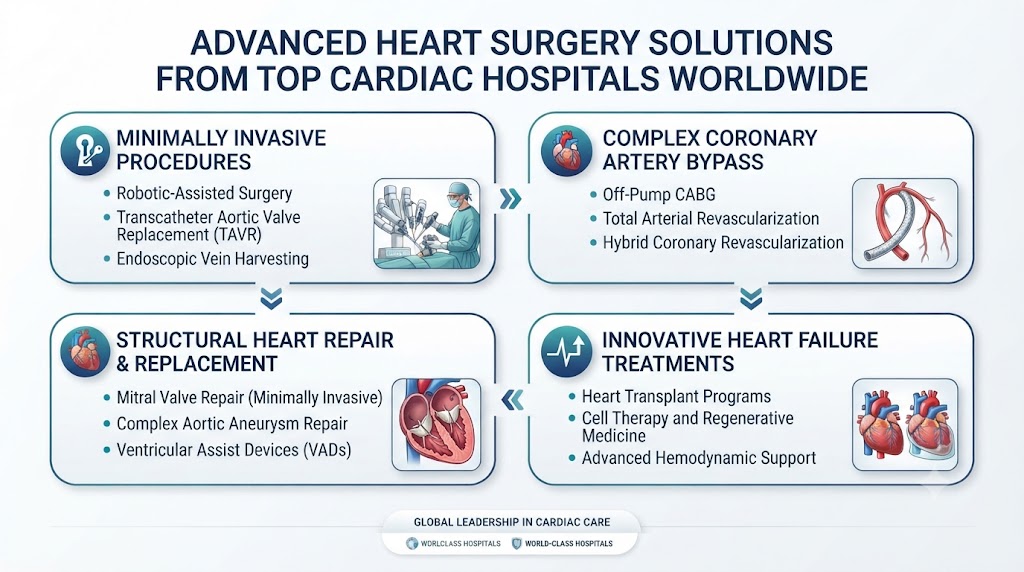
Coronary artery bypass grafting (CABG) is one of the most frequently performed cardiac surgeries. In India, the bypass surgery cost in India is significantly lower than in Western nations, often without compromising on the use of advanced techniques like Off-pump CABG or robotic-assisted approaches.
- Off-Pump CABG: Performed on a beating heart, reducing the need for a heart-lung machine and often speeding up recovery.
- Robotic CABG: Offers smaller incisions, leading to reduced pain and faster return to daily activities.
Heart Valve Replacement Surgery Cost in India
Heart valve replacement surgery cost in India depends largely on the choice between mechanical and biological (tissue) valves. Patients must also consider if they are candidates for TAVR (Transcatheter Aortic Valve Replacement), a minimally invasive approach that avoids open-chest surgery entirely.
Expert Insight: “The decision between a mechanical or biological valve involves long-term considerations regarding blood-thinning medication and valve durability. This must be a detailed discussion between the patient and the cardiothoracic surgeon.”
Standards for Minimally Invasive and Pediatric Surgery
Minimally Invasive Heart Surgery
The best hospitals for minimally invasive heart surgery prioritize techniques that preserve the structural integrity of the chest wall. Look for programs that utilize high-definition endoscopic cameras and specialized robotic platforms to reduce trauma to the patient.
Pediatric Cardiac Surgery
Pediatric heart care requires specialized infrastructure. The best hospitals for pediatric cardiac surgery provide:
- Pediatric-specific perfusionists.
- Dedicated neonatal and pediatric ICU environments.
- Long-term follow-up programs for congenital heart conditions.
Medical Tourism for Cardiac Care
Medical tourism for cardiac care in India is well-organized, with hospitals often providing dedicated International Patient Departments (IPDs). These departments assist with:
- Medical visa facilitation.
- Language interpreters.
- Concierge services for family accommodation.
- Telemedicine follow-ups post-discharge.
For those conducting preliminary research, resources like BestHeartSurgery.com offer educational insights into comparing global standards and navigating the logistics of medical travel.
Future Trends in Cardiac Surgery
The field is shifting toward “precision cardiology.” Key trends include:
- AI-Assisted Diagnostics: Using machine learning to predict coronary blockages before they become critical.
- 3D Surgical Planning: Using patient-specific 3D printed models of the heart to practice complex surgeries before the first incision is made.
- Remote Monitoring: Wearables that transmit real-time telemetry to the surgeon’s office, allowing for early detection of post-operative arrhythmias.
Frequently Asked Questions
- How do I verify a surgeon’s credentials? Check their medical board registration and request information on their specific fellowship training and volume of procedures performed.
- Is heart surgery in India safe for international patients? Yes, provided the hospital is JCI-accredited and has a dedicated international patient support structure.
- What is the recovery time for bypass surgery? Typically 6–8 weeks for initial healing, with a full return to normal activity depending on the patient’s baseline fitness.
- Are robots used in all heart surgeries? No, robotic surgery is highly specialized and is typically reserved for specific procedures like mitral valve repair or bypass grafting.
- How do I compare hospital costs? Request a “comprehensive package” quote from the international patient desk, which should include ICU, room, surgeon fees, and standard medications.
- What is the difference between mechanical and biological valves? Mechanical valves are durable but require life-long blood thinners; biological valves avoid long-term anticoagulation but may need replacement after 10–15 years.
- What role does the family play in recovery? Emotional support and assistance with post-operative physiotherapy are vital components of a successful recovery plan.
- Can I travel back home immediately after surgery? Most surgeons recommend a recovery period of at least 2–4 weeks in the host country before international air travel.
- Are diagnostic tests done at home valid in India? Usually, yes, but hospitals will likely perform their own set of tests to ensure consistency and precision before surgery.
- How often should I have follow-ups after heart surgery? This depends on the procedure, but regular check-ups at 1, 3, and 6 months post-surgery are standard practice.
Key Takeaways
- Clinical Outcomes Over Marketing: Always prioritize hospitals with transparent track records and recognized international accreditations.
- Individualized Care: There is no “one size fits all” in cardiac surgery; choose a team that evaluates your unique anatomy and comorbidities.
- Cost is Variable: Ensure you understand exactly what a quote covers—hidden costs in ICU upgrades or specific consumables can impact your budget.
- Communication is Key: Never proceed with a surgical team that is unable or unwilling to explain the procedure and its risks in language you fully understand.
Conclusion
The pursuit of the best heart surgery hospitals is an exercise in diligence. By focusing on objective markers of quality—such as hospital accreditation, surgeon experience, and the availability of advanced technology—patients can take control of their cardiac journey. Whether seeking care domestically or through medical tourism, the goal remains the same: a successful procedure followed by a safe, supported recovery. Always consult with qualified medical professionals to tailor these general insights to your specific cardiac health needs.
